

Influence Starts with You
When we talk about influence, we tend to think about the impact we have on others.
But many leadership thinkers suggest it actually starts much closer to home – with ourselves.
So the question becomes: how do we create that impact in our own careers and lives?
When you look at people who build strong careers, one pattern shows up again and again. They are very good at asking for what they want – and getting it.
Now, this isn’t about being demanding or pushy. It’s about not compromising or settling for less than you deserve. Because the reality is that many opportunities don’t arrive automatically. They come when people are willing to ask.
And that’s why asking matters.
Why We Hold Back
So if asking is so important, why don’t more people do it?
One of the main reasons is simple: They fear being told “no”.
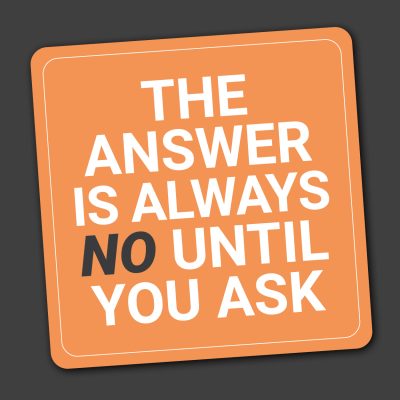
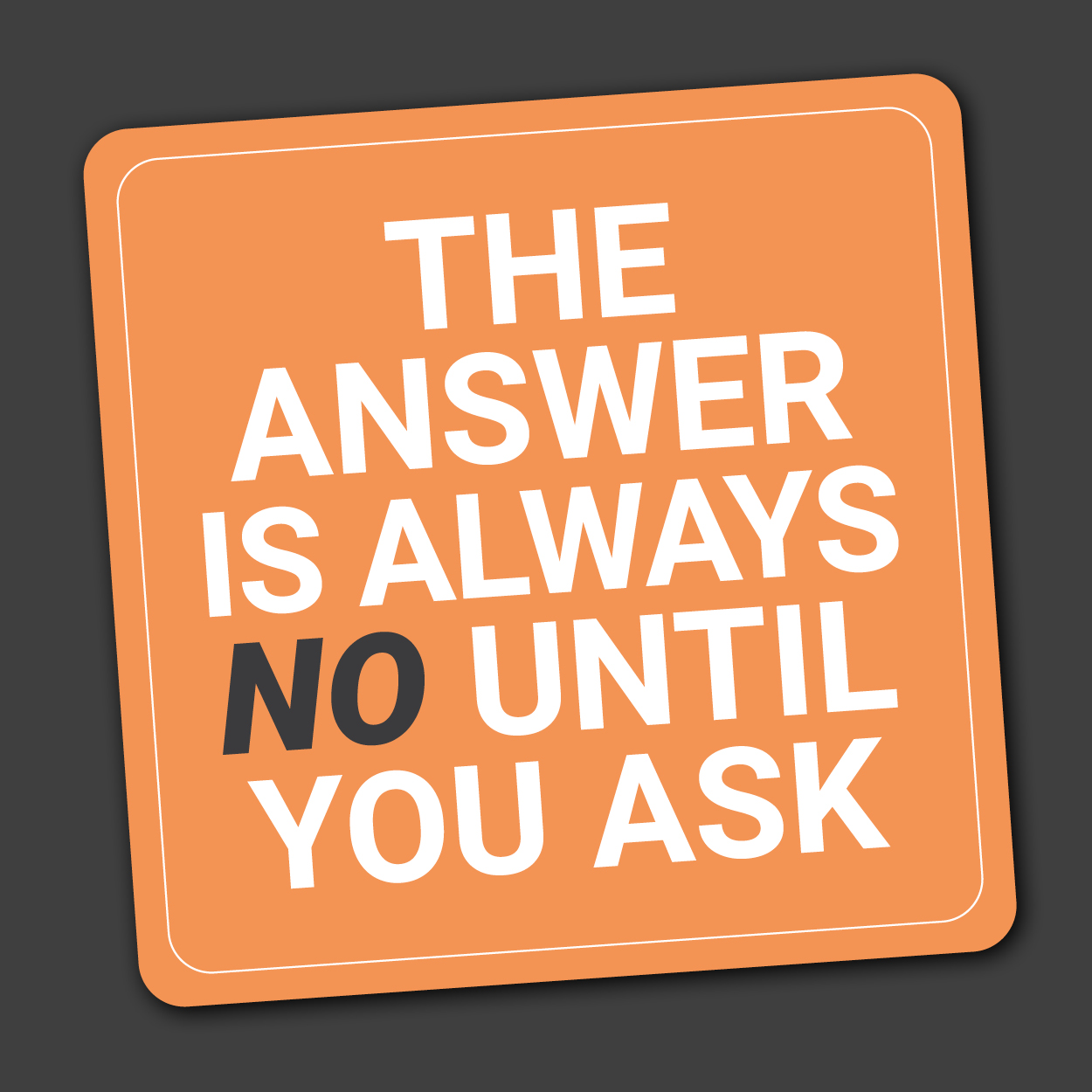
But here’s the reality: The answer is always no… until you ask.
Which means that by not asking, we’re not avoiding rejection. We’re guaranteeing it.
The Richard Branson Example
Take this example.
Back in 1978, Richard Branson wanted to buy an island in the British Virgin Islands.
Necker Island was on the market for $2 million.
Branson made an offer: $120,000.
It was rejected outright.
And on the surface, that makes sense. It feels like an inappropriate ask.
But here’s what happened next.
A year later, in 1979, Branson bought Necker Island for $180,000.
So what changed?
- The seller’s situation changed.
- Their priorities changed.
- Their urgency changed.
And suddenly, an “inappropriate” ask became acceptable.
Rethinking “Appropriate”
This is where it gets interesting.
Because one of the most common reasons people give for saying “no” is that the ask felt inappropriate.
But the Branson example challenges that idea.
Was the ask inappropriate?
Because “inappropriate” isn’t fixed.
It shifts with timing, priorities, pressure, and perspective – most of which we can’t fully see.
The Assumption Trap
And this is where we often get it wrong.
There is often very little correlation between why we think we’re being told “no” and the real reasons behind it.
We interpret the response through our own lens – our experiences, assumptions, and biases – rather than the other person’s reality.
So when we hear “no”, we explain it in a way that makes sense to us:
- It was too much.
- Too soon.
- Too bold.
But more often than not, that’s just a story we’re telling ourselves.
We assume the ask was wrong…
When in reality, we may just not have understood the context.
Where Influence Breaks Down
There’s another issue.
Even when we do ask, we often draw the wrong conclusion.
We hear “no” and assume we shouldn’t have asked in the first place.
But often, the issue isn’t what we asked – it’s how we asked.
And when you break it down, most “no’s” come from things like this:
- We went straight in with the ask, instead of opening the conversation
- We gave one option, instead of opening up thinking
- We focused on what we wanted, not how it would land
- We didn’t consider what would make it a “yes” for them
Because how we ask shapes how the request is experienced.
And that’s often what drives the response.
From Asking to Influence
The real skill in influencing isn’t just asking well. It’s understanding well.
It’s about having the curiosity to explore what’s really behind a response, rather than filling in the gaps with our own assumptions.
Because the goal isn’t to avoid a “no”.
It’s to understand how to get to a “yes”.
That’s influence.